

Finding Solutions in Happy Accidents
Some of nature’s - and humanity’s - most successful innovations emerge from the unexpected. Breakthroughs often arise from failed experiments, surprising outcomes, or even unfortunate accidents that reveal entirely new possibilities.
This is the essence of “Integrate the Unexpected,” one of Biomimicry’s Life’s Principles: the capacity to recognize value in unintended results and to pivot toward the opportunities they reveal.
Penicillin's Accidental Discovery
Alexander Fleming's discovery of penicillin (1928) started when he returned from vacation to find mold contaminating his bacterial culture - typically a ruined experiment. Before discarding the "failure," he noticed something remarkable: the bacteria surrounding the mold had died. This happy accident led to the discovery of antibiotics, revolutionizing medicine and saving countless lives. wikipedia.org
Nature itself constantly integrates “accidents”. Genetic mutations which are essentially "mistakes" in DNA replication for example, occasionally produce traits that prove advantageous, becoming the foundation for evolutionary adaptation.
A Human Design Example: Play-Doh
Play-Doh began as a wallpaper cleaning compound in the 1930s. The putty-like substance was designed to remove coal residue from wallpaper in homes heated by coal furnaces. But as natural gas heating became standard, the product's original purpose vanished; a classic business failure scenario.
Then came the unexpected observation: teachers and parents had begun using the wallpaper cleaner for children's craft projects and Christmas ornaments. Rather than abandoning a "failed" product, the company recognized this unintended use and pivoted entirely. They reformulated the compound, added colors, and relaunched it as a children's toy. Today, Play-Doh is an iconic craft material with over three billion cans sold worldwide. wikipedia.org
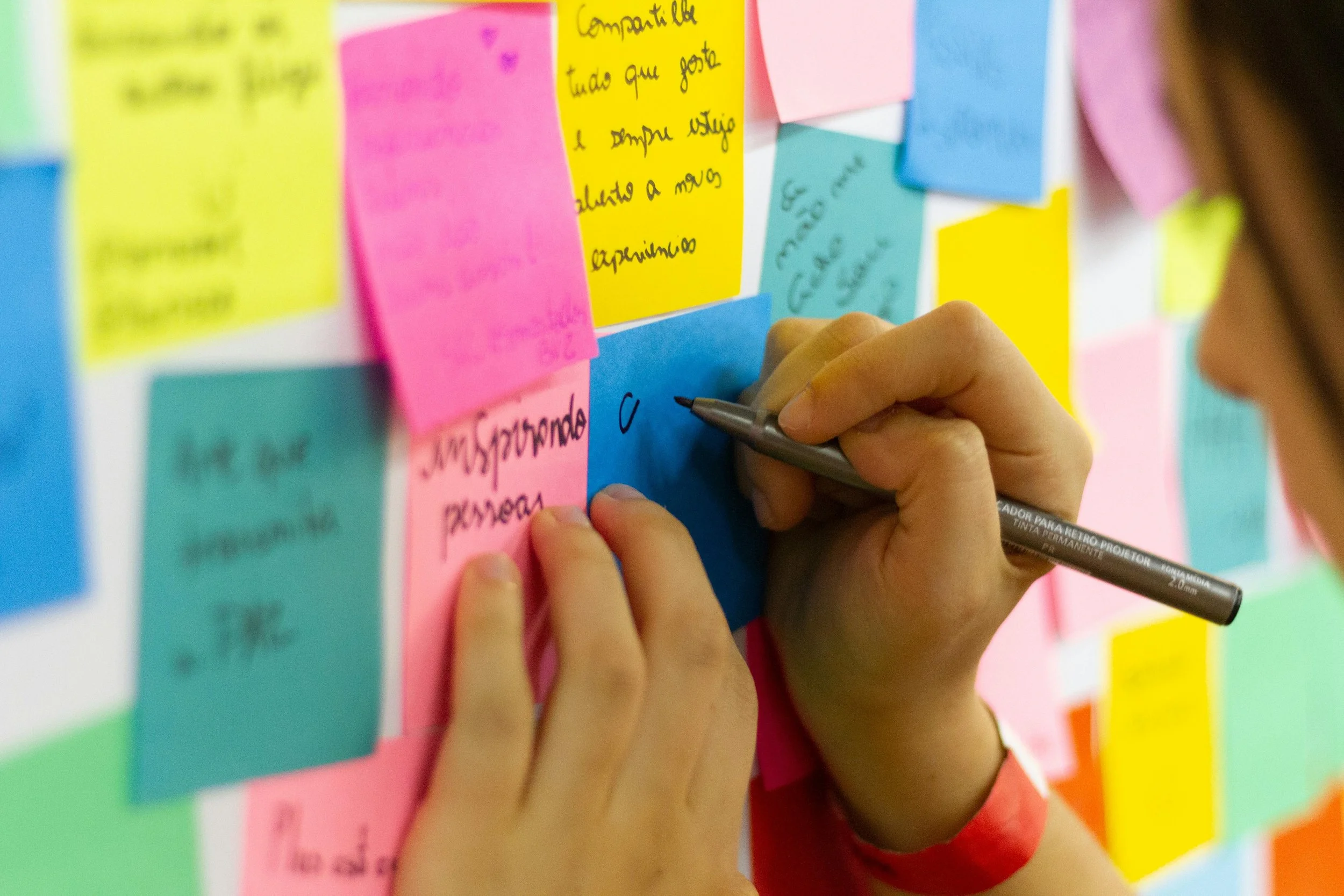
Another Human Design Example: Post-it Notes
In 1968, 3M scientist Spencer Silver was attempting to create a super-strong adhesive. Instead, he developed a weak, pressure-sensitive adhesive that could stick to surfaces but was easily removable; essentially a failure by his original objective.
For years, this "failed" glue sat without purpose until 3M colleague Art Fry experienced a frustration: bookmarks kept falling out of his church hymnal. Remembering Silver's low-tack adhesive, Fry realized this "failure" was perfect for re-positionable notes. The result? Post-it Notes became one of 3M's most successful products, generating billions in revenue from what began as an unsuccessful experiment.
The Design Lesson
Embracing something unexpected during the design process requires a willingness to remain open and attentive. It means noticing when mockups behave differently than anticipated, when users interact with products in unintended ways, or when a “failed” prototype reveals hidden potential. Sometimes the sketch that slips from your desk and lands upside down becomes the spark for a breakthrough idea.
As you design, test, and iterate, stay alert to these happy accidents. The unexpected is not always a problem to correct; it can be an opportunity to explore directions you never imagined. The ability to recognize and embrace change - even when it arrives uninvited - is often what separates enduring success from eventual obsolescence.

Happy Accident Play-doh
Happy Accident Post-it
