
Burrs in the dog’s fur
The story of Velcro;
In 1941, Swiss engineer George de Mestral returned from a walk with his dog and noticed something both annoying and intriguing: the dog’s fur was covered in burdock burrs. Instead of brushing them off and moving on, he paused to ask why these tiny seed heads clung so stubbornly to the dog. Under a microscope, he discovered the answer: each burr was covered in tiny, flexible hooks that naturally grabbed onto loops in fabric and fur. That simple strategy -hook meeting loop- left him enticed.
It’s the kind of moment we celebrate at inter-twine: when close observation of nature reveals a clever solution hiding in plain sight.
Wondering whether humans could recreate this natural fastening system, de Mestral began experimenting. Over several years, he tested different materials, weaving patterns, and manufacturing methods until he finally developed a two-part textile: one side covered in hooks, the other in loops, designed to attach and detach repeatedly. He patented his invention in 1955, naming it Velcro.
Today it’s used everywhere -from shoes and medical devices to spacecraft- and it remains one of the clearest examples of biomimicry in action. More than showing how function can shape form, Velcro reminds us that when we slow down and look closely, nature still has plenty to teach us.
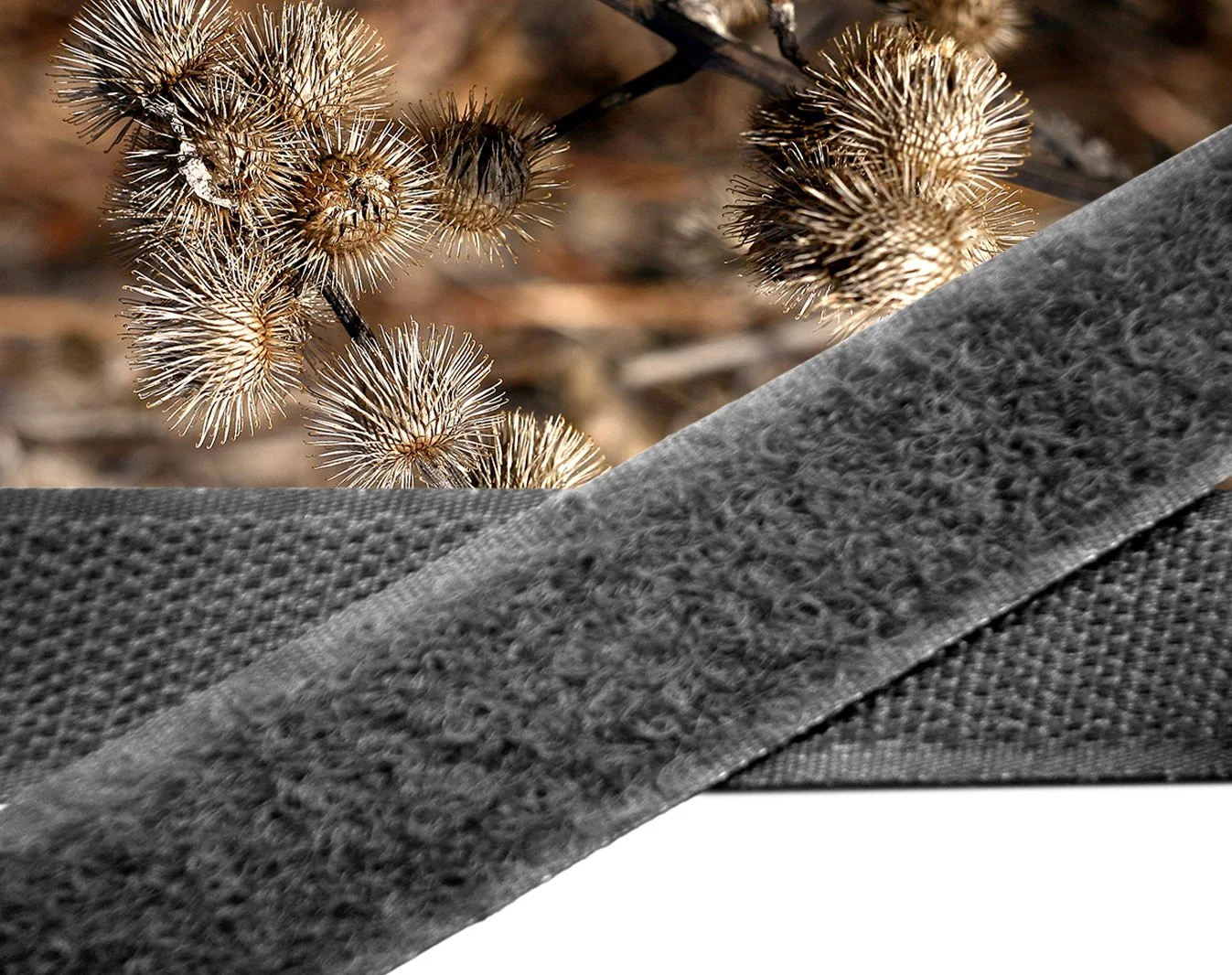
How burrs in a dog’s fur inspired the the new, sticky closure for clothing; Velcro