

Designing with Natural Cycles
A ger is a traditional, round, portable dwelling made from a collapsible wooden frame covered with layers of sheep-wool felt and canvas. Designed for a nomadic way of life, it can be assembled, disassembled, and moved as families shift between seasonal pastures.
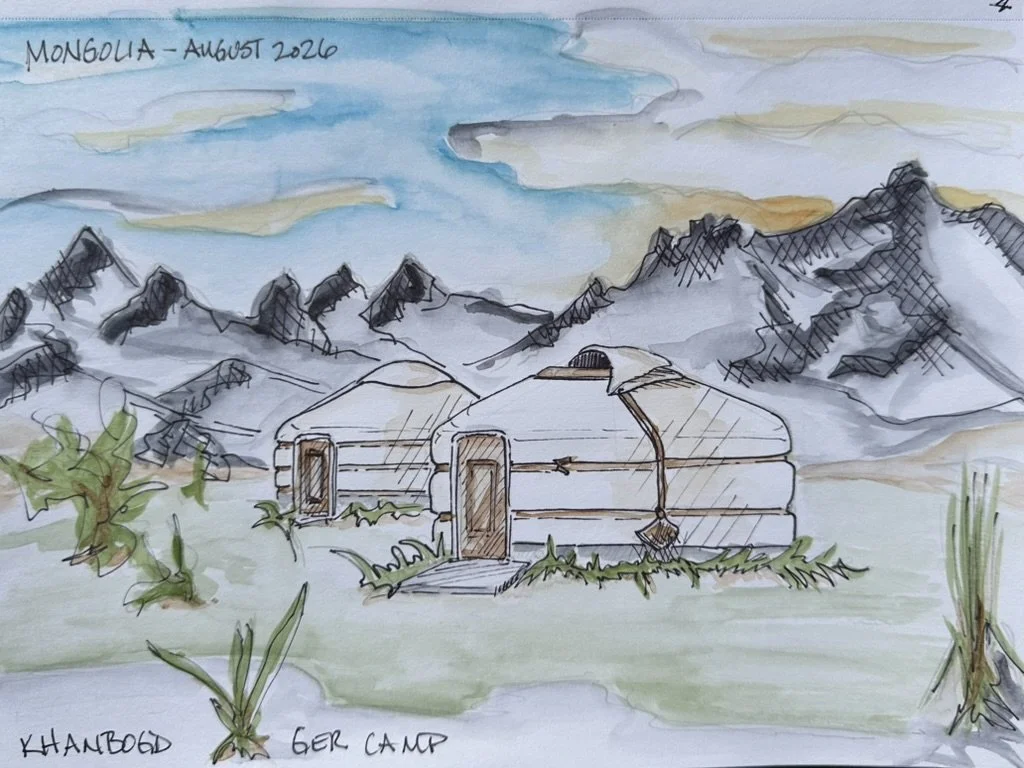
Sketch by Treasure Hinds
These structures are beautiful real-world examples of several of biomimicry's Life's Principles. One of them, Leverage Cyclic Processes, encourages us to notice repeating phenomena in nature and find ways to take advantage of them. In Mongolia, the cycles of seasons and sunlight have long been woven into the ger's design: one cycle is well known, the other easy to overlook.
The Cycle of Seasons
Most people are already familiar with this rhythm: herders moving between winter, spring, summer, and autumn camps, following the availability of grass and water as conditions change throughout the year. The frequency and distance of these moves vary by region and local conditions, but the ger is the physical expression of this way of life, a home built to follow the land.
At a street market in Mongolia, it's possible to find stalls selling the modular components for an entire home: wooden wall sections, roof poles, felt insulation, and other supplies. Seeing these pieces sold individually, ready to assemble, disassemble, transport, and reassemble, makes the logic of the system immediately visible.
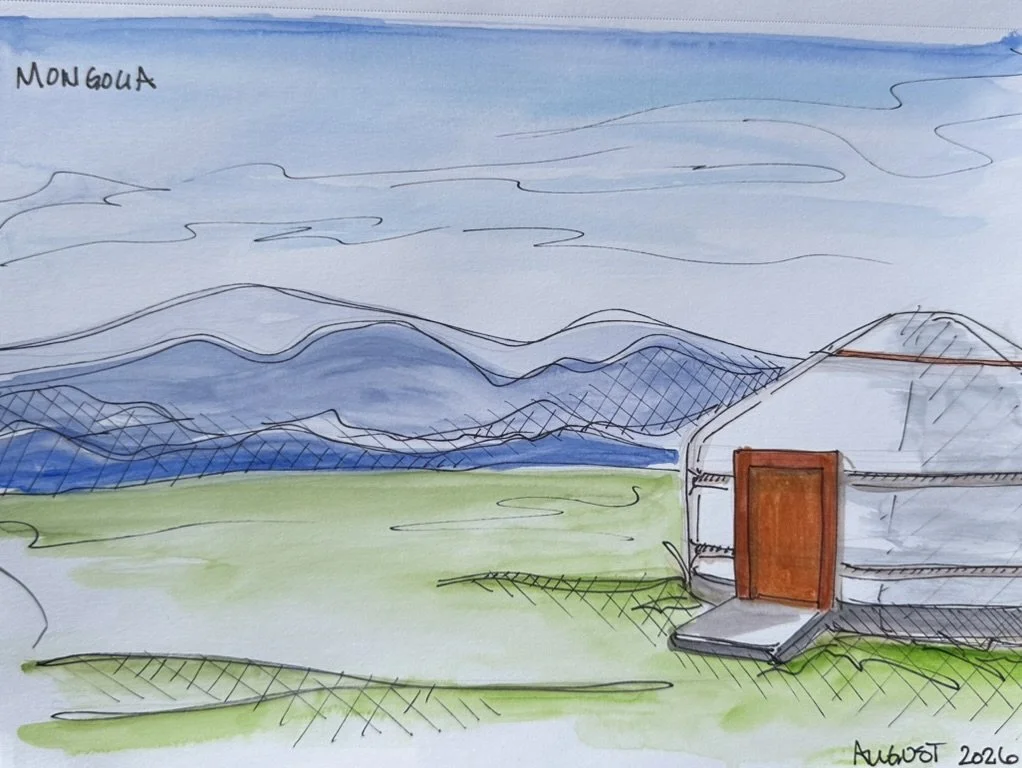
Sketch by Treasure Hinds
The ger's design begins with its circular lattice walls, called khana, which connect to roof poles, or uni, meeting at a central roof ring called the toono. Felt coverings and other layers complete the enclosure. The components work together as a system, but they can also be taken apart and moved to the next location. Depending on the ger's size and the number of people working, assembly can take anywhere from about an hour to several hours. The home isn't simply modular; it's designed with disassembly in mind.
The Cycle of Days
What's less expected, and to me, the more remarkable design choice, is that the ger also responds to a cycle that repeats every day, not just every season. Its’ entrance traditionally faces south, and together with the toono, this alignment lets sunlight enter and trace a path across the interior as the sun moves through the sky. The toono functions not only as an opening for light and ventilation but also as a natural timekeeper. It doesn't give an exact time, but in summer it fairly reliably marks a morning's 9 a.m., noon, and 3 p.m., points herders use to organize activities like milking livestock and drying dung for fuel.
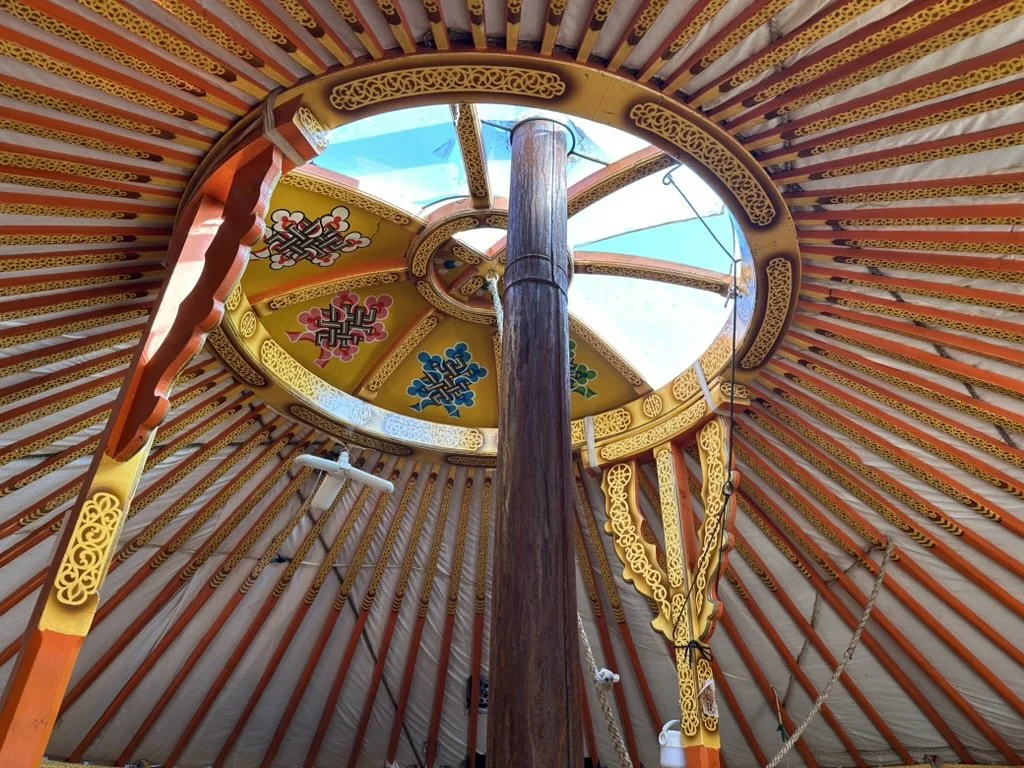
There's nothing added to make this work. No clock, no mechanism, no extra material or cost. The structure is simply oriented and shaped so that a phenomenon already happening, the sun crossing the sky, becomes usable information; an intentional, and unassuming design decision.
Designing with the Cycle
The seasons determine when and where nomadic herders move; the ger's modular construction allows the home to move with them. The daily movement of the sun provides light and information; the ger's orientation and toono make use of that movement.
The seasonal migration is the more visible story, the one most people already picture when they think of nomadic life. But the toono is the quieter, more telling example of Leverage Cyclic Processes at work: not creating an entirely new system, just noticing a cycle already in motion, the sun crossing the sky each day, and shaping the structure to work with it. Other buildings have been designed around the sun's cycle too, from Stonehenge's alignment with the solstices to Santiago Calatrava's beautiful World Trade Center Transportation Hub, whose skylight is oriented so that sunlight travels the length of the building's axis each September 11 morning.
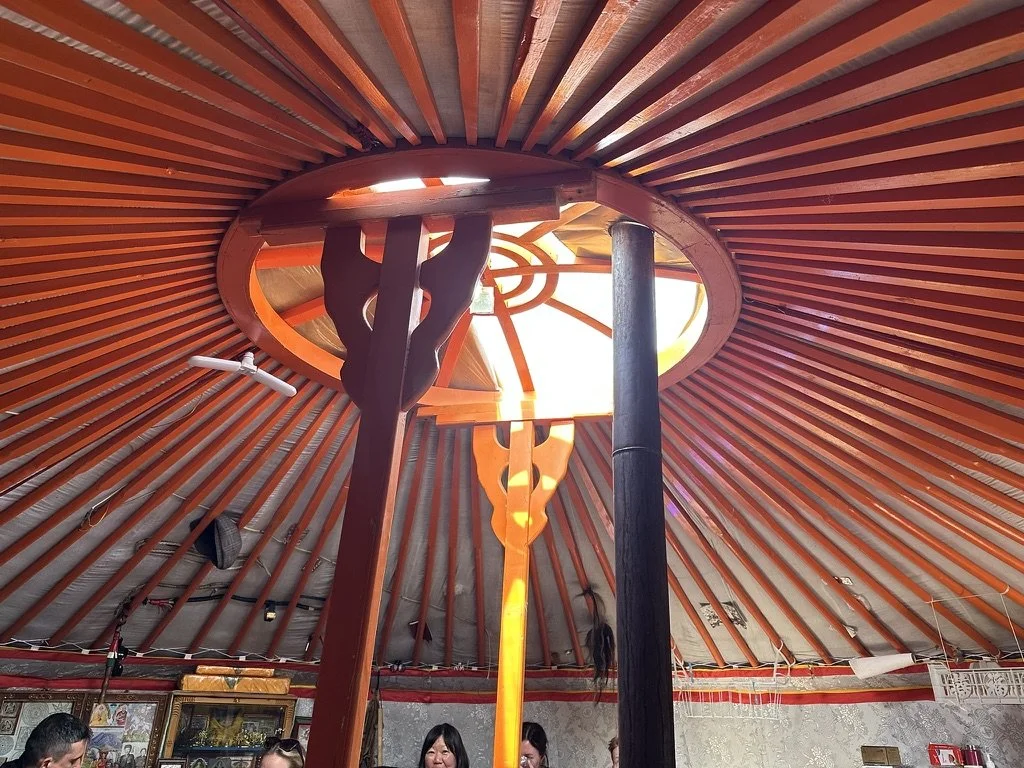
For designers, this kind of observation can open up new possibilities. A changing temperature, a daily movement of sunlight, a seasonal flow of water, or a recurring pattern of use can all become an opportunity. The work is often about noticing these existing cycles and finding creative ways to work with them.
Sources:
Treasure and her family spent two weeks sleeping in gers while traveling across Mongolia this summer. She learned these details during conversations with ger owners and farmers along the way.
"World Trade Center Transportation Hub Oculus Designed in Remembrance of 9/11," ArchDaily, https://www.archdaily.com/901840
