

The Magic of Being Covered in Teeth
Sharks are beautiful, streamlined animals, and their skin appears to be smooth to the touch. They seem perfectly designed for moving through water.
In some California aquariums, it is possible to pet them, and the experience is usually quite surprising. All is well if you pet the fish from the head toward the tail; the skin feels silky smooth. But if you do the petting the other way around, it is more like pulling your hand along a cheese grater or sandpaper. How can that be?
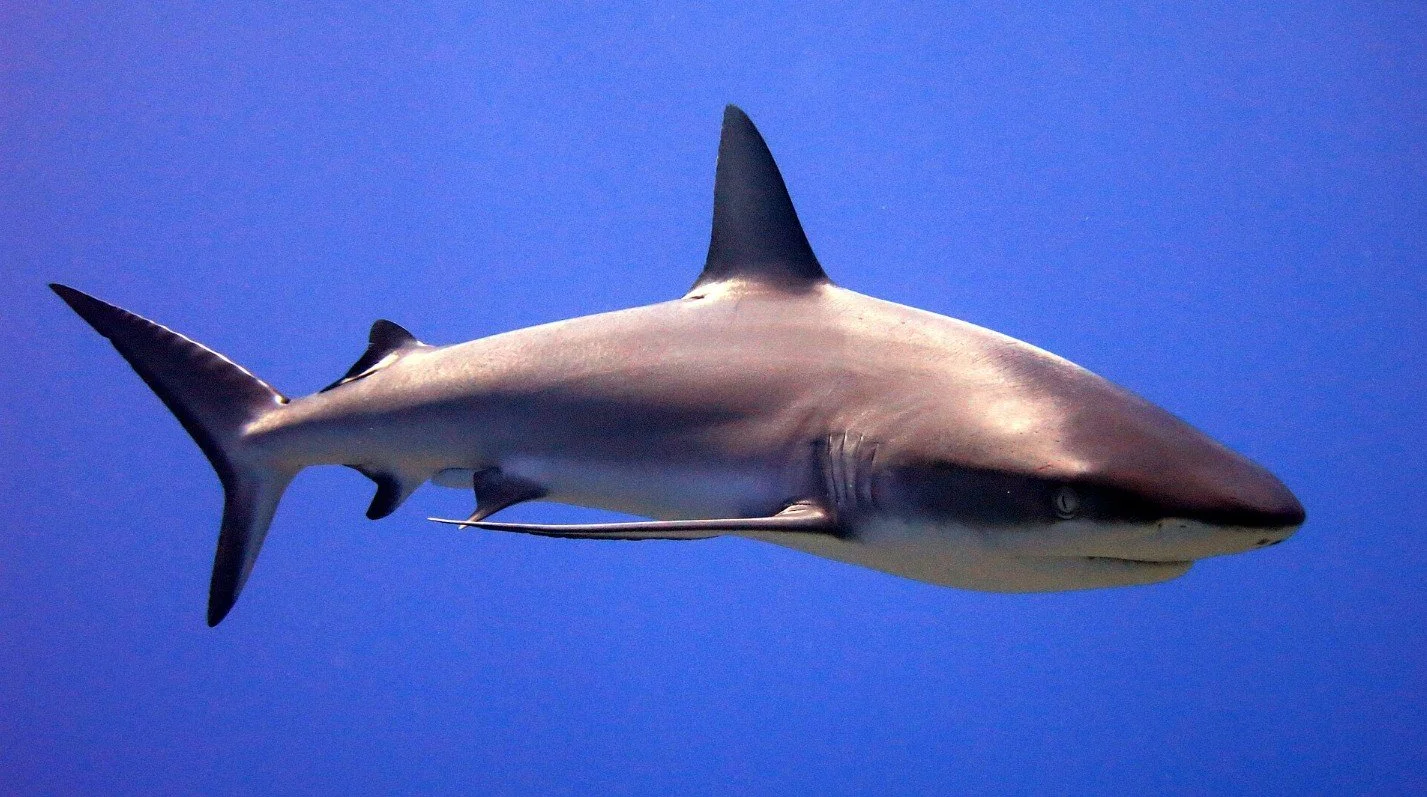
Credit: Kevin Lino 2025
If we could look through a scanning electron microscope, we could see something remarkable: the shark's skin is covered with thousands of tiny, tooth-like structures called dermal denticles. Their crowns are generally oriented toward the tail, although the exact shape, size, and arrangement of denticles varies among shark species and across different parts of the body.
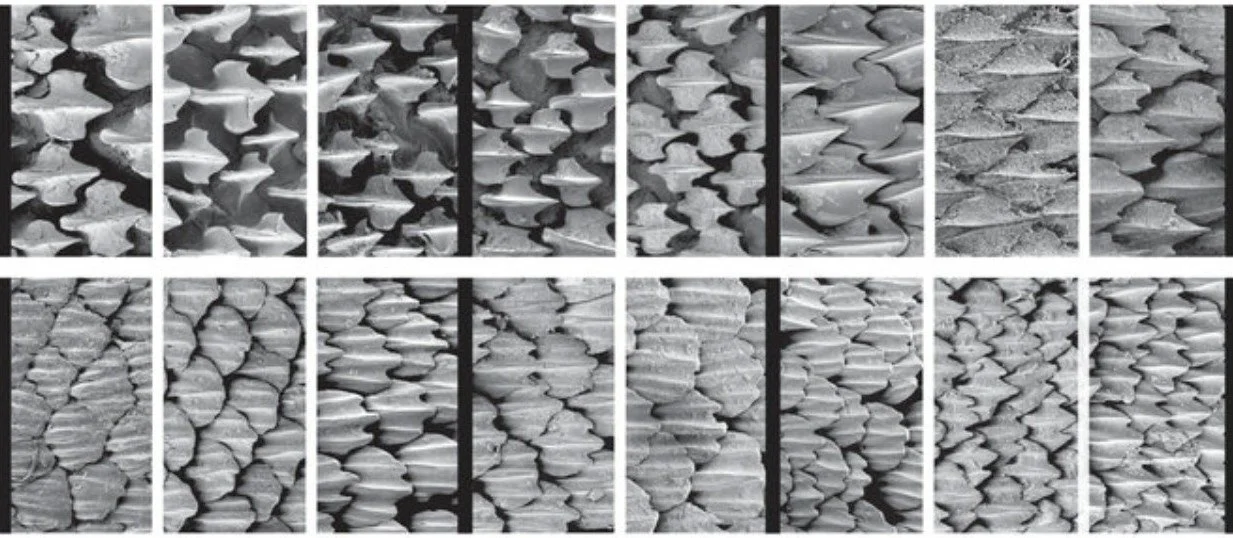
Scanning electron microscope (SEM) images of shark skin denticles. Note the riblet features protruding from the denticles. Credit: Fletcher T M 2015.
We call these tiny structures covering the skin "tooth-like" because they are much closer to teeth than to the scales of most bony fish. Dermal denticles are composed primarily of dentine and a highly mineralized outer layer called enameloid, with a central pulp cavity. They are embedded in the dermis and are evolutionarily related to teeth.
What are the denticles for? What are they doing for the shark?
The denticles protrude from the skin at an angle and have a complex three-dimensional shape, often with elongated ridges and valleys. On many fast-swimming sharks, these riblet-like features are aligned with the direction of water flow.
This repeated surface structure influences the flow of water along the shark’s body and can reduce skin-friction drag, particularly under turbulent flow conditions. The tiny ridges interact with the thin layer of water moving along the skin, guiding the flow in ways that can reduce resistance.
Engineered riblet surfaces inspired by shark skin have demonstrated drag reductions approaching 10 percent under optimized conditions.
There are other benefits, too. Denticles can provide mechanical protection, reduce abrasion and helping protect the skin from predators. Their shape and arrangement vary with shark species, habitat, and body location, suggesting that different denticle structures can serve distinct functions.
Scientists have also investigated the possible role of shark skin in resisting fouling and the attachment of ectoparasites. Some studies suggest that the ribbed surface structure can make attachment more difficult under certain conditions, but this is still an area of research, and the function of denticles might not be the same across all shark species.
What can we learn from the denticles?
As you might have heard, Olympic swimsuit designers have taken a page from the shark's playbook and explored how a textured surface can influence movement through water. The Speedo LZR Racer, introduced for the 2008 Olympic Games, used highly engineered materials and surface treatments designed to reduce drag and improve hydrodynamic performance.
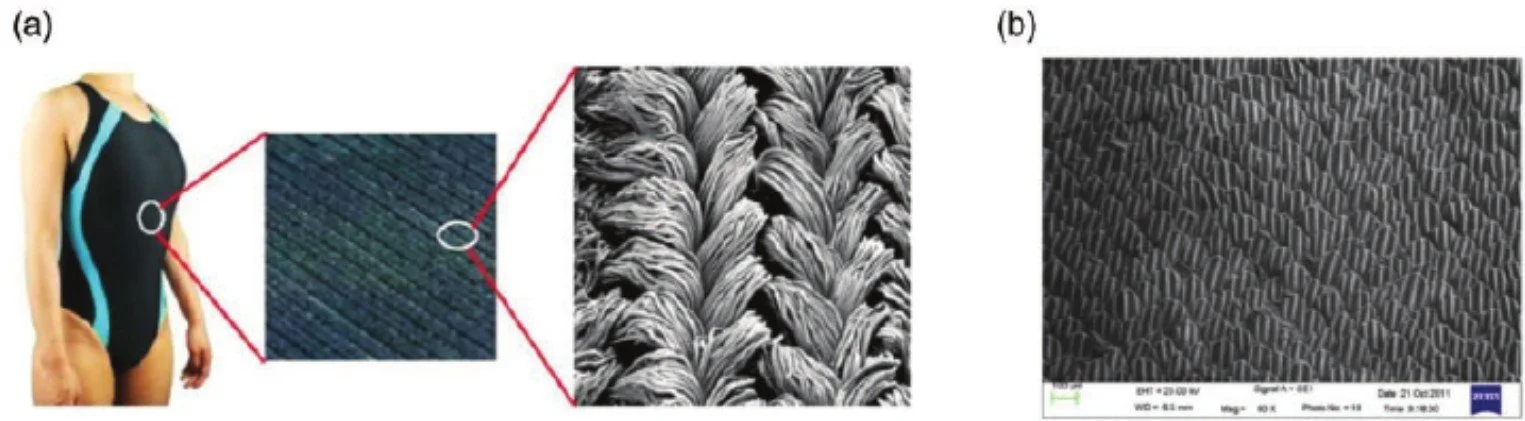
(a) Speedo’s sharkskin-inspired swimsuit. Enlarged areas show fabric under light microscopy and scanning electron microscopy. (b) Scanning electron microscopy image of sharkskin. Credit: A review of noteworthy progress and opportunities in swimsuit design Li at al. 2024
Swimmers wearing the suits set numerous world records during the Beijing Olympics, and full-body polyurethane suits were subsequently prohibited in international competition beginning in 2010. The suits' surfaces were not exact copies of shark denticles, but they demonstrated how characteristics observed in nature could be translated into a different, human-made material and context.
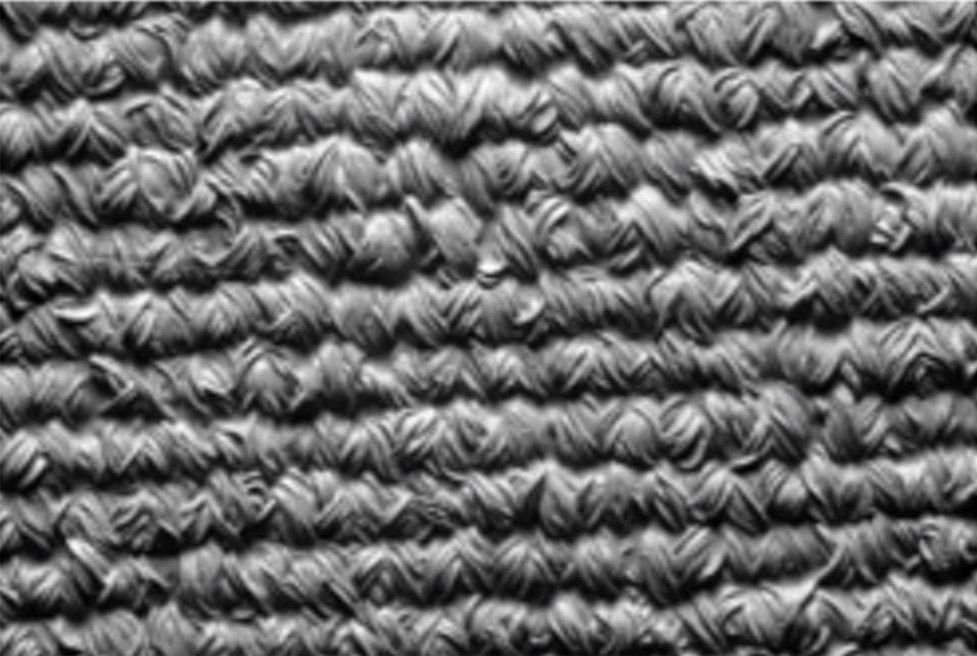
Speedo wetsuit texture. Credit: Dr. George Lauder
The same inspiration has led to another, very different application. Sharklet micropatterns use carefully arranged microscopic features inspired by shark skin to influence how microorganisms interact with a surface. Research has shown that these patterns might reduce bacterial attachment and biofilm formation compared with smooth surfaces, and they have been investigated for applications including medical devices and hospital environments. Here, the useful insight from shark skin is no longer about moving efficiently through water but about how microscopic surface architecture can influence what happens at the interface between two systems.
This is perhaps the most interesting lesson for designers. A surface is rarely just a boundary. It can influence movement, friction, attachment, abrasion, contamination, heat transfer, and countless other interactions between a designed object and its surroundings. What appears to us as texture can be a highly functional structure.
The next time a design challenge involves a surface, it may be worth looking beyond the question of what that surface should look or feel like. What does it need to accomplish? How will it interact with air, water, skin, microorganisms, particles, or another material? What if the surface itself could become part of the solution?
