

Shaped by Place
This summer, Treasure has been traveling across Africa, journaling, sketching, and painting the beauty she encounters along the way. This article is based on her writings and includes her photos and artwork.
Getting to the Serengeti is not easy, she shares. From Nairobi, the journey takes several days, crossing the border into Tanzania before heading west. Even after reaching the Serengeti and Ngorongoro conservation areas, there is still a long drive ahead, down a dusty road into the heart of the park. Tanzanians call this stretch the "African massage." You feel every bump.
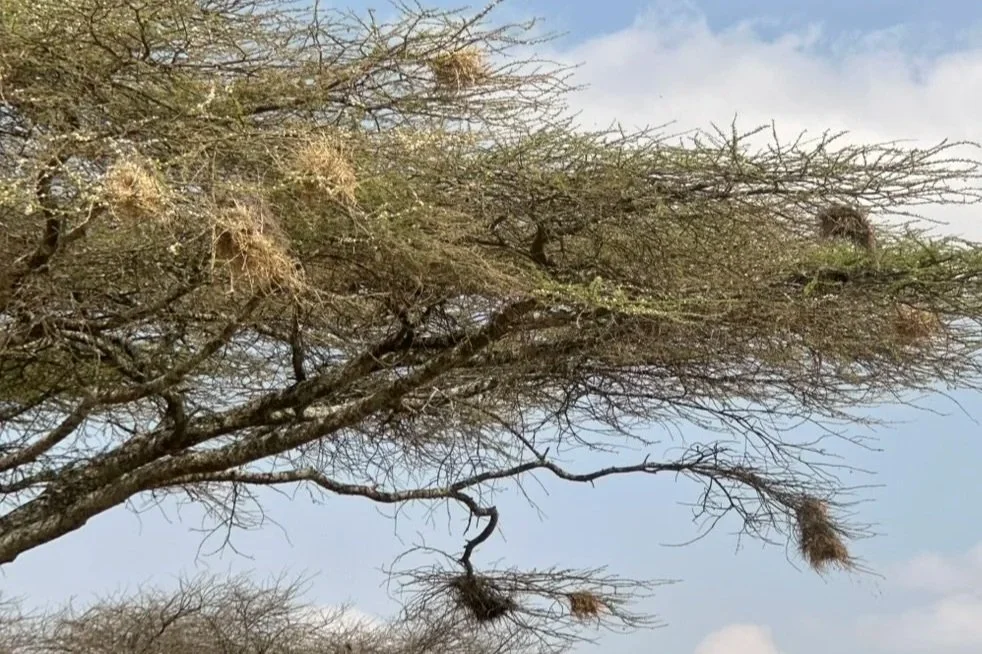
Photo by Treasure Hinds
Somewhere along that long ride, shapes hanging from the trees begin to appear. Round structures woven from twigs and grass sway gently from the branches. Once you notice one, it’s hard not to keep seeing them. Some trees hold only a few, while others are covered with dozens, transforming the branches into something that resembles a carefully decorated tree.
These hanging spheres are the nests of African weaver birds. Similar nests appear in Zanzibar, the Maasai Mara, and the Serengeti, each one slightly different from the last.
The differences were striking. In lush, tropical Zanzibar, the nests appear smaller and more tightly woven. In the Maasai Mara and the Serengeti, they seem larger, looser, and rougher around the edges. The overall design remains the same, but each landscape seems to produce its own variation.
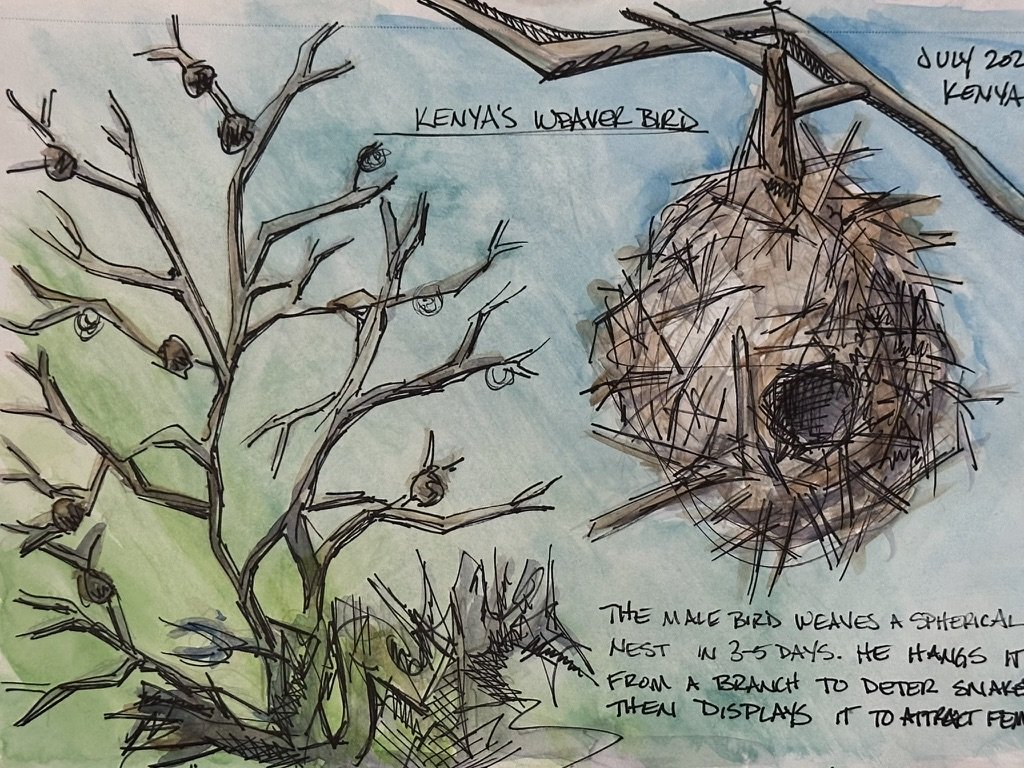
Kenya nests. Sketch by Treasure Hinds
A Different Kind of Nest
Most of us picture a bird's nest as a simple bowl. Weaver birds have chosen a different solution altogether. Rather than building an open structure, they construct a fully enclosed sphere with a small entrance tucked into the lower portion of the nest. That single design decision changes everything.
A bowl has to support itself from only one direction. A sphere must maintain its structure from every angle, a much more complex challenge for a bird equipped with nothing more than a beak and two feet. Depending on the species, constructing a nest may take anywhere from a few days to several weeks.
The reward for that extra effort is protection. The enclosed shape and carefully positioned entrance help shield eggs and chicks from rain, heat, and predators, including snakes. The structure may be small, but the engineering is remarkably sophisticated.
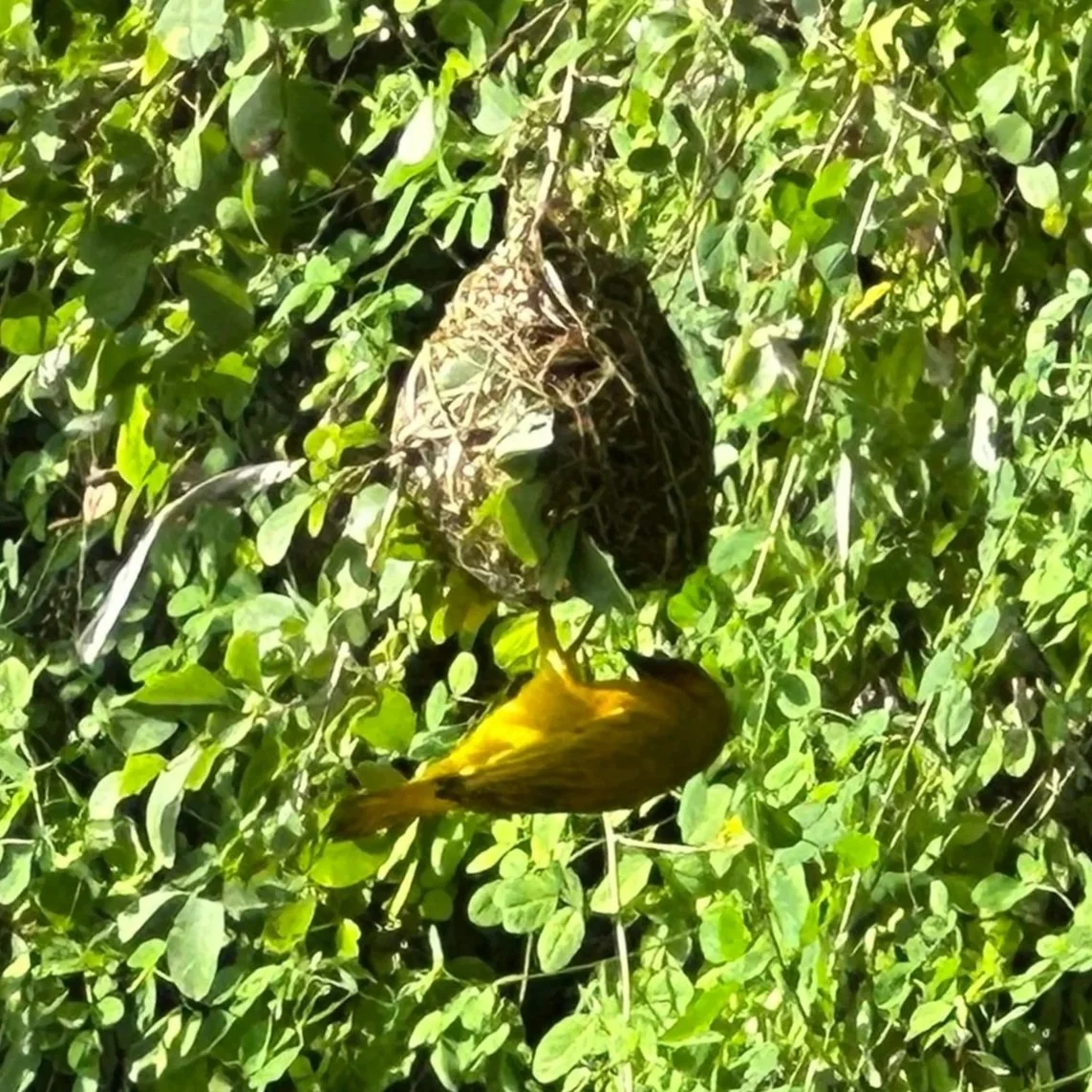
Zanzibar nests.
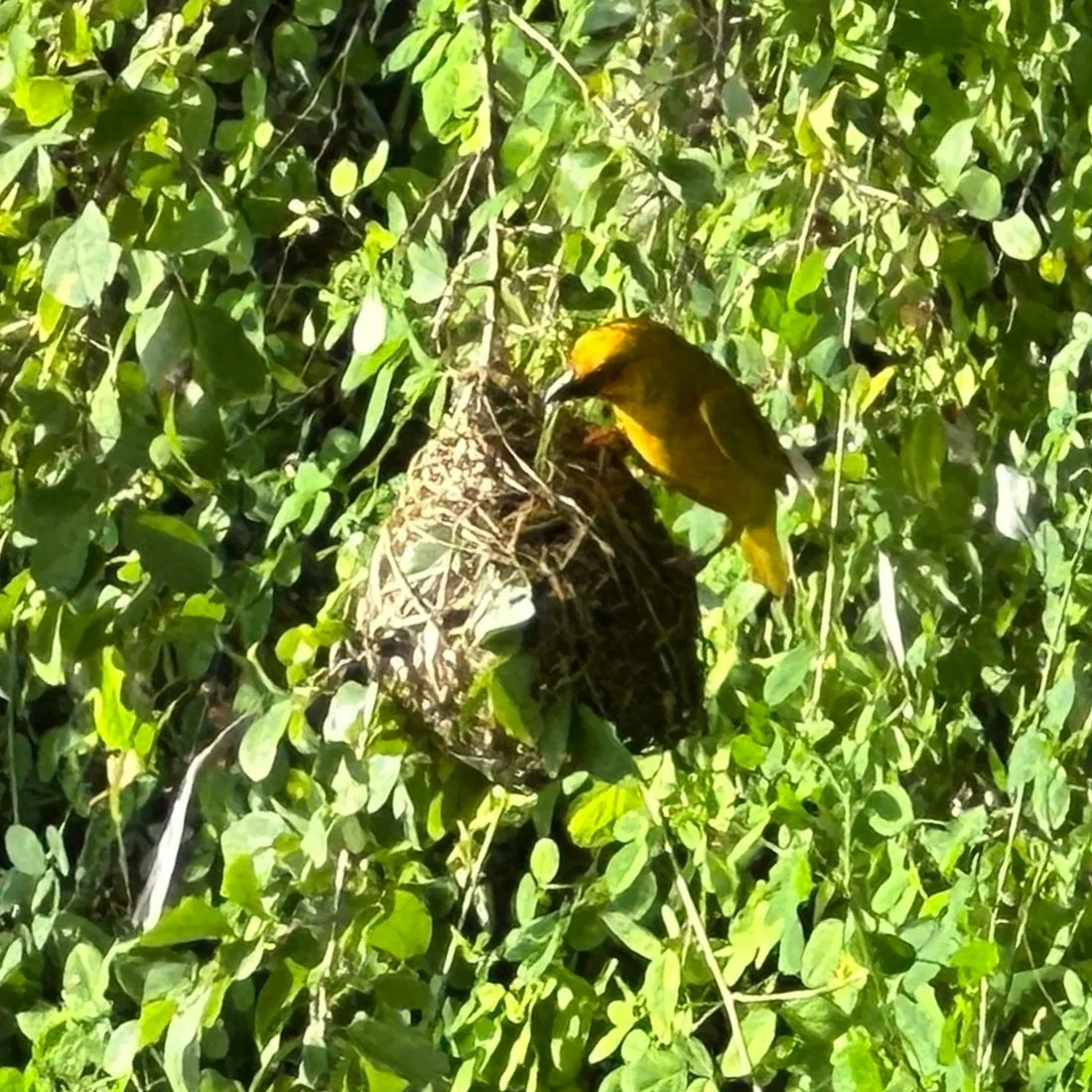
Built to Impress
The male weaver bird builds the entire nest himself, and he does so with a very specific goal in mind: attracting a mate. Once the nest is complete, the female inspects it carefully. She examines the walls, tests the entrance, and decides whether it meets her standards. If she isn't impressed, she leaves. Sometimes she dismantles the nest entirely. In either case, the male begins again. Some birds build several nests before one is finally accepted.
In this way, the nest becomes much more than shelter. It becomes a demonstration of strength, skill, persistence, and fitness.
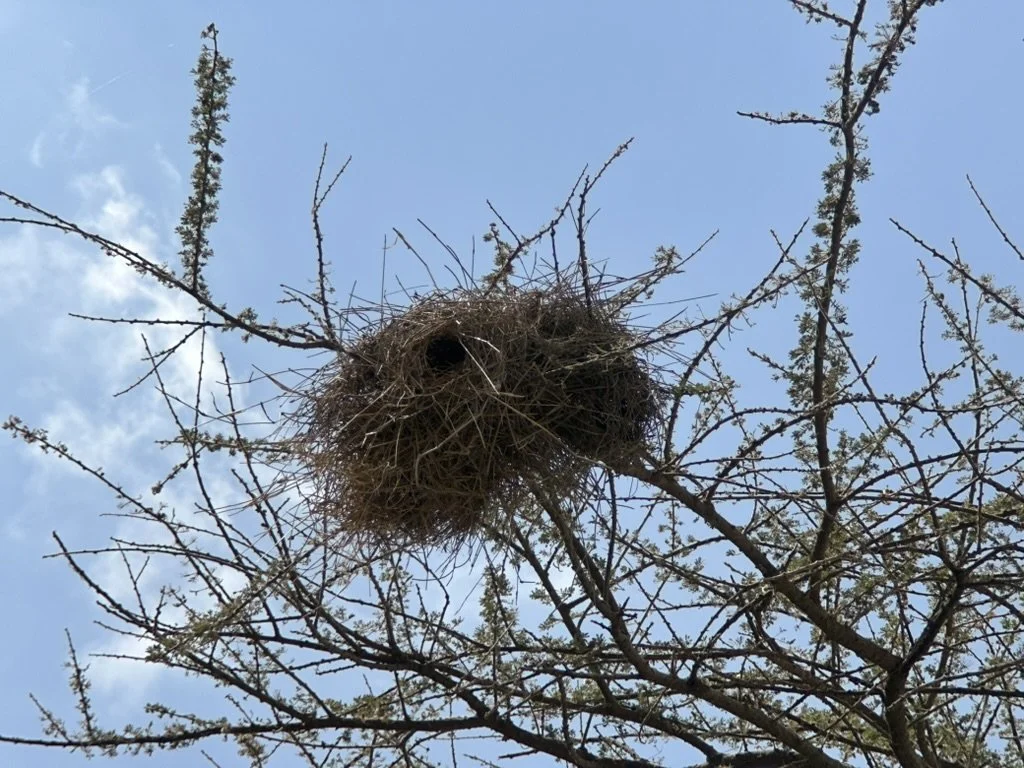
Serengeti nest.
A Design Lesson
At first glance, all the nests seem similar. They are spherical, suspended from branches, and woven from whatever materials were available nearby. They all solve the same problem: protecting eggs and chicks.
But the longer you look, the more differences you might notice.
The nests in Zanzibar appear smaller, denser, and more tightly woven. Those in the Serengeti and the Maasai Mara are larger and rougher, with looser patterns and more variation from one structure to the next. Some are nearly spherical, while others are elongated, almost like teardrops hanging from the branches.
These differences are not accidental.
Wind, rain, available materials, predators, competition, and even the habits of individual birds all influence the final design. In open grasslands, strong winds favor streamlined forms that can sway without breaking. In forests, narrow entrance tunnels help protect chicks from snakes and other predators. Fresh grasses shrink as they dry, tightening the structure, while bark fibers and vines create entirely different patterns in construction.
Even the birds themselves leave their signatures behind. Researchers have discovered that individual weavers develop distinctive weaving styles, much as designers develop their own visual languages.
Looking at the weaver bird's creations, Louis Sullivan's famous phrase "form follows function" no longer sounds like an abstract design principle; it becomes plainly visible.
Function never exists in isolation; every function is shaped by its context. In this region, environmental differences cause the familiar bowl-shaped nest to give way to a spherical alternative.
What is even more interesting is that, after the sphere emerged as the preferred solution, it continued to evolve in response to local conditions. Life continually adjusts, responds, and adapts. The result is variation.
Looking back at Treasure's sketches, that may be the most remarkable thing of all.
They are not just drawings of nests. They are drawings of place.
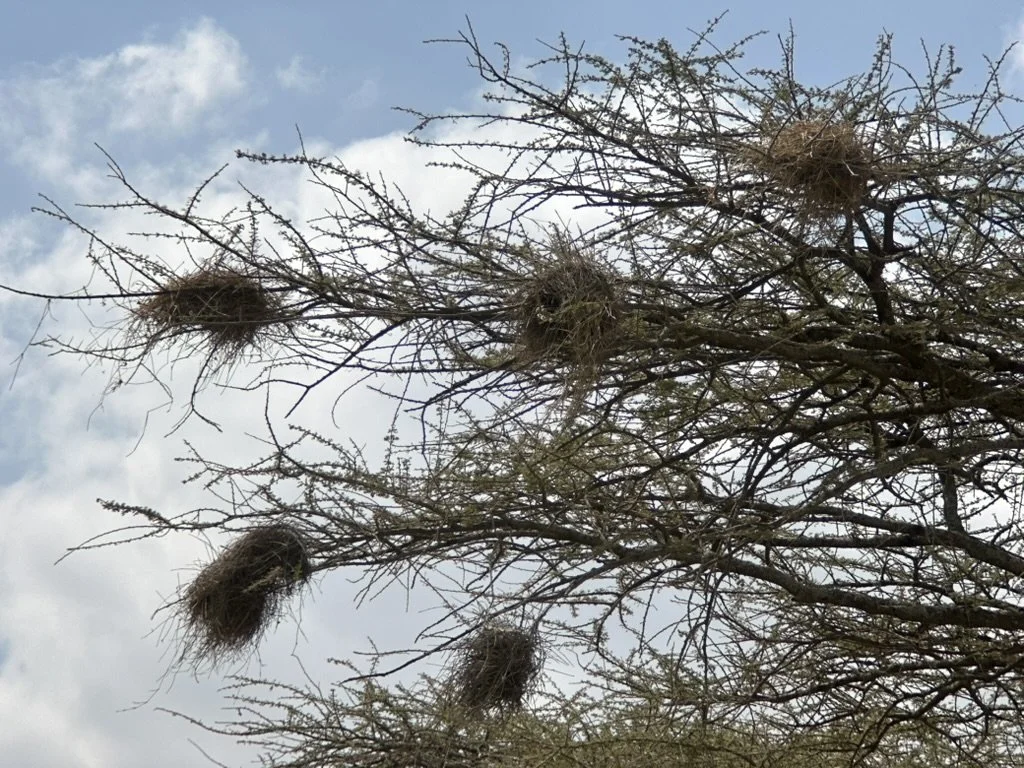
Serengeti nests.
Sources:
Londolozi Blog,
"Weaving Wizardry"; A-Z Animals,
"Weaver Birds Animal Facts"; New To Birding,
"Weaver Birds: Masters of Intricate Woven Nests"; bird-life.com,
"This Tropical Bird Builds Nests That Hang Like Lanterns"; EPOD/USRA,
"Love Nest: Build it and She Will Come (maybe)"