Giant Trolls and Circularity in Art
When Communities Use Local Waste to Create Iconic Art
Growing up in the Pacific Northwest, something always pulls me into the woods. The way trails disappear into shadow, how moss softens everything it touches, the color palette that only exists here. When I first heard about giant troll sculptures scattered around Seattle, I expected something whimsical and Instagram-worthy. What I found was something woven into the landscape itself, and an unexpected lesson in what it looks like when discarded materials become something meaningful.
In nature, there is no landfill. When a tree falls, it becomes habitat for insects, food for fungi, and eventually rich soil for new growth. Materials cycle endlessly. What one organism discards, another uses. This is one of biomimicry's core principles: use what's readily available, and be locally attuned to where you are. Nature builds from what's at hand and adapts to the conditions of place. Thomas Dambo's trolls do exactly that.
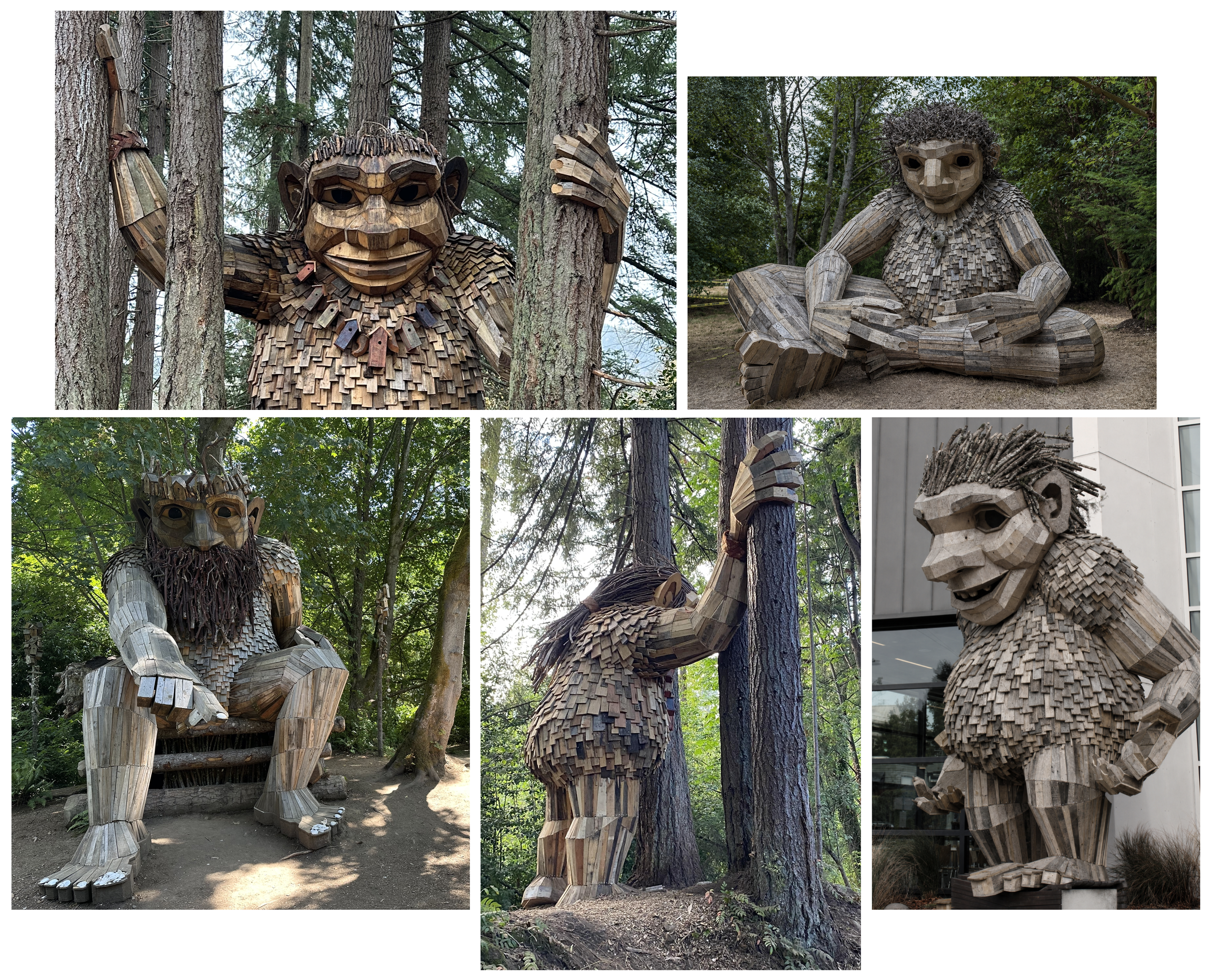
I've visited several of his Pacific Northwest installations, from dense forests near Issaquah to the shorelines of Vashon Island. Each one is built almost entirely from recycled and locally sourced materials: wooden pallets, scrap lumber, driftwood, shells, stones, whatever the surrounding community contributed. The Northwest Trolls series features six figures across Portland, Bainbridge Island, Issaquah, West Seattle, Vashon Island, and Ballard. It's worth noting that Dambo sculpts the heads back in Denmark and ships them to each site, where the body and surrounding environment are then assembled from materials sourced close to where it stands. It's not a perfect closed loop, but the intention is clear. When you build from what's locally available, your work naturally fits its context. It belongs.
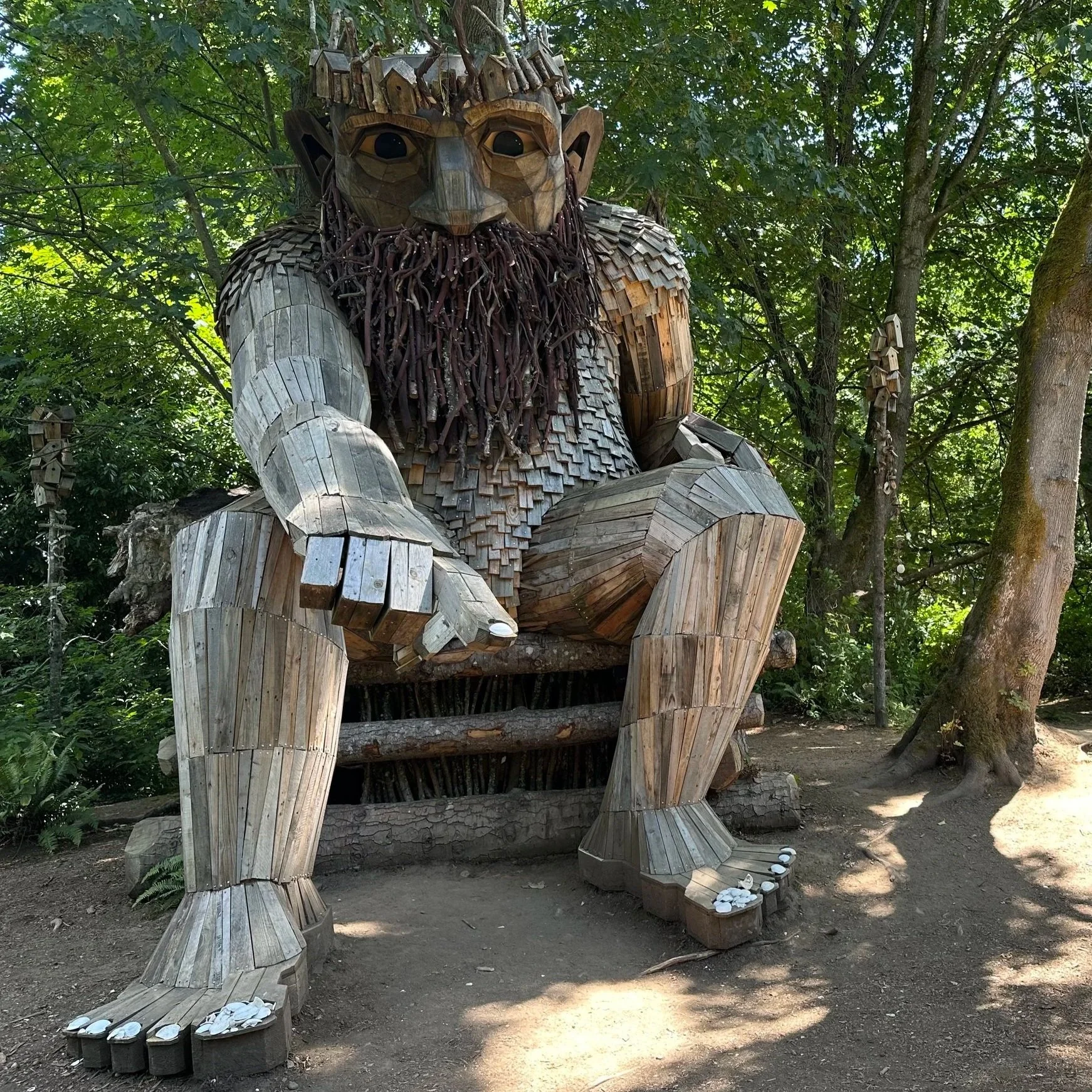
Oscar the Bird King, Vashon Island
On Vashon Island I stood before Oscar the Bird King, his massive form crowned with birdhouses made from resident-donated scraps, shells from the shore, natural artifacts from the island. He felt less like a sculpture and more like a guardian of the stories from that place. What makes this even more powerful is how the community participates in building them. Volunteers bring tools and labor. In some cases, tribal members and local artists collaborate to weave in cultural symbols, particularly around Coast Salish territories in the Puget Sound. The trolls aren't imposed on these places, they emerge from them.
For designers, I think Dambo's work is worth sitting with. He doesn't optimize for efficiency alone. He optimizes for alignment. The trolls work because they're made from what's available, shaped by who's present, and responsive to where they stand. That's what a life-centered approach actually looks like in practice: not just using less or recycling more, but designing systems that function like living ones. If you want to experience this firsthand, Dambo's installations are scattered across the US, and he recently added a new installation at the California Nature Art Museum in Solvang. The next time you're near one, go find it. And the next time you walk past a pile of pallets or a stack of scrap wood, ask what that material could become if you stopped seeing it as the end of a line and started seeing it as part of a cycle. Nature has been answering that question for billions of years. The trolls are just one more reminder that when we pay attention, we can too.
Journal entry by Treasure
Northwest Trolls; Way of the Bird King https://www.nwtrolls.org