

Ximena Rozo, Industrial and Textile Designer
We are so grateful to feature our dear friend Ximena Rozo in this conversation. Thank you, Ximena, for taking the time to share with us your thoughts, creative practice, and your beautiful, life-centered approach to design.
Ximena is an industrial and textile designer from Bogotá, Colombia, based in Washington, DC. She uses design as a tool for transformation, focusing on creating positive, lasting impacts for people, society, and the environment.
Through her studio, Ximena Rozo Design, she aims to foster thriving ecosystems that benefit both people and the planet. The studio prioritizes sustainable, biodegradable materials, empowers producers, and crafts high-quality objects that offer ethical alternatives to mass production. Through this work, Ximena supports economic opportunities, cultural enrichment, and lasting value through a life-centered approach.
How did your project/company begin? What was the gap you saw that nobody else was addressing?
As a creative professional and entrepreneur, I believe the best way to identify opportunities is by offering people a dream. So I always start my process with a question: “What if?”
“What if we brought traditional designs to a contemporary setting? What if we combined expert craftsmanship with beautiful, high-quality, sustainably-sourced materials? What if we used the rich cultural and creative heritage of indigenous Latin American communities to foster their economic and social development? What if we work with biodegradable products that don't pollute the environment at the end of their lifecycle? What if I leverage short supply chains to reduce dependencies, and what if consumers have access to slow-production offerings, low-tech handmade techniques that have passed the test of time to minimize global warming?”
Based on these elements, I saw a compelling opportunity and founded Ximena Rozo Design. To combine traditional designs and artisan techniques with the highest quality, sustainably-sourced materials to create innovative and beautiful contemporary objects for interior spaces. I feel I am unique in developing a contemporary design language that speaks to handmade craftsmanship. Products that are manufactured in an ethical, efficient, and responsible manner by artisan communities in Colombia. Striving to empower these artisans and contribute to the reduction of exclusion and unemployment while providing an alternative to mass-produced furniture and furnishings.
Your work bridges contemporary design with indigenous Latin American craft traditions. How did you first connect with the artisan communities you work with?
I began working with artisan communities over 30 years ago during my undergraduate studies in textile design at Universidad de los Andes in Bogotá, Colombia. During those years, I spent part of my career connecting my interest in design with my passion for political science and social impact. So, for my senior thesis at the university, I found a way to merge both. For my senior thesis, I collaborated with women artisans in an underprivileged Bogotá neighborhood, helping them diversify their craft and organize as a cooperative.
This experience showed me how design could foster mutual support and empower single mothers in a challenging environment. Partnering with psychologists, we added workshops on communication and conflict resolution, transforming the design project into a vehicle for social and economic enrichment.
What started as a small group grew into over 30 participants in 2.5 years, supported by the Ministry of Development through Artesanias de Colombia and Opcion Colombia. To this day, I see these women thriving at trade shows, selling products we developed together. My passion for travel continually connects me with new artisan communities across Colombia, allowing us to blend skills and share meaningful, handcrafted stories with the world.
How do you collaborate with the craftspeople on your designs? How does the natural world influence your work? Do people from Colombia show up in your creations?
I collaborate with artisans in Colombia in a mutually enriching manner. I learn about their craft, processes, legacy, and the meanings ingrained in their work. My approach is deeply respectful, recognizing that they are masters of their craft, with knowledge often passed down through generations, rooted in their understanding of local materials and methods. I view our work as a collaboration that expands both our knowledge.
I strive to establish relationships that feel collaborative and mutually enriching rather than transactional. There is incredible value in open communication, and, for example, in the power of the “word”: we verbally agree on timelines, due dates, and other production terms. I believe that the qualities of my interactions with artisans are shaped more by individual values than purely business-driven motives.
Furthermore, I approach my work with the understanding that not all artisan communities are the same. Some come from Indigenous backgrounds, others are Afro-descendent, and some live in rural areas, while others are in urban settings. Recognizing these differences allows me to tailor my design and business relationships accordingly. I am genuinely curious about their environments, meeting their families, and, in organic instances, introducing them to mine.
Together, we work toward producing products that we love, admire, and feel proud of, often excited by the beauty and capabilities of our outcomes. We also remain respectful towards future consumers and users of our collections, who will appreciate the value of our products and the stories behind our designs and crafts.
Your pieces feel timeless rather than trendy. How do you think about longevity in your designs?
Timelessness is a principle of my design philosophy, though I don’t consciously pursue it. I believe that a piece transcends trends when its design emerges from an authentic quest for innovation, grounded in understanding, knowledge, and cultural awareness. When the guiding principle is integrity rather than what is currently fashionable, the result is often timeless.
My design language at Ximena Rozo Design is shaped by years of experience, integrating my backgrounds in textile and industrial design with my interests and travel adventures. I strive to understand the global and the local, the industrial and the handmade, the high-tech and the low-tech. When a piece feels unique and recognizable, I know it will not be merely trendy; it will be timeless and valuable!
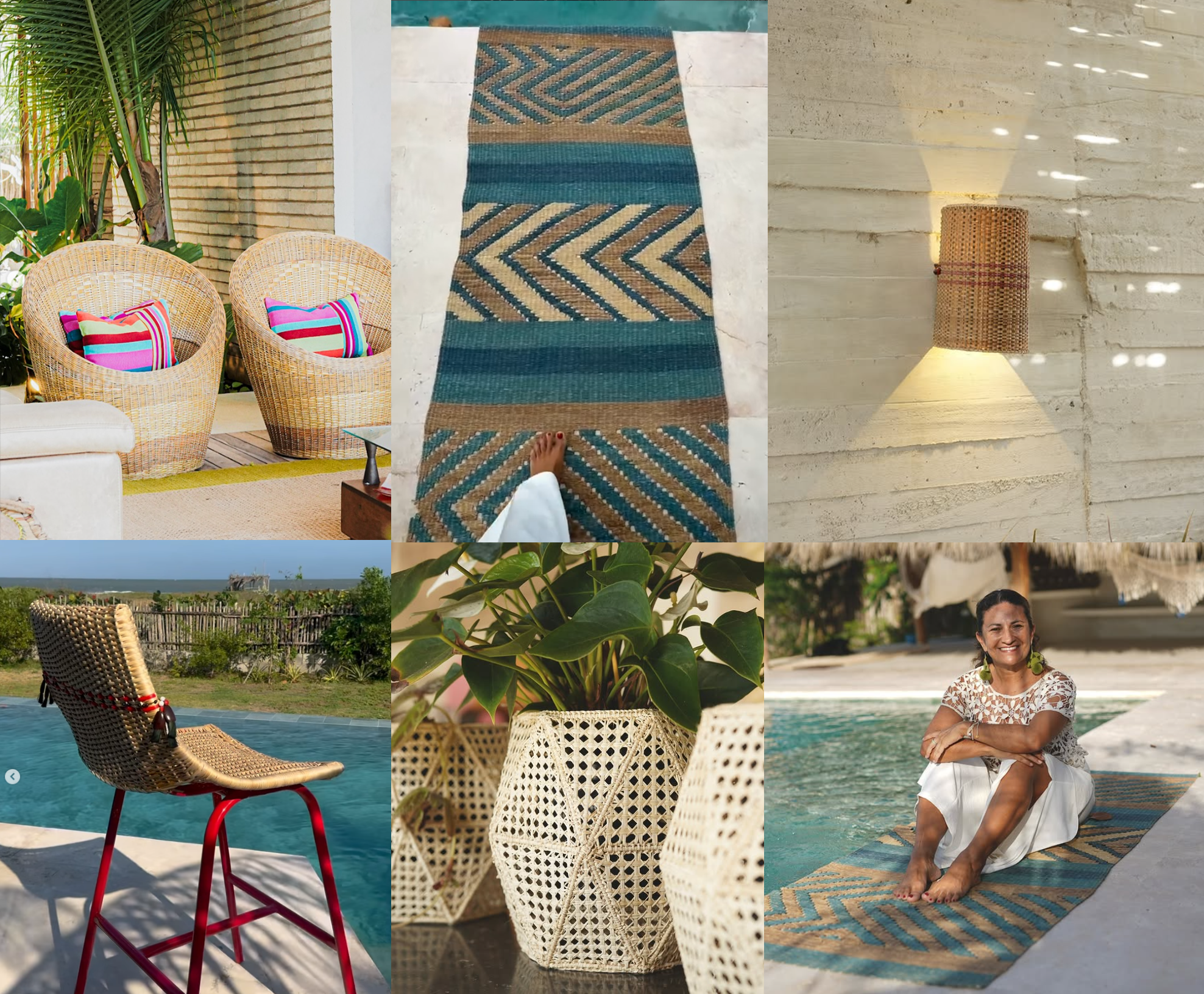
Product examples - Ximena Rozo Design
