

The Whale and Mr. Fish
There’s a well-known biomimicry story about an engineer (Mr Fish, no joke!) who visited an aquarium, and noticed bumps along the leading edge of humpback whales’ flippers on a sculpture. This seemed strange, as he assumed the leading edge should be smooth. Curious, he tested small bumps on his wind turbine project and discovered the blade’s efficiency increased by about 30 percent, significantly reducing drag—similar, perhaps, to a serrated knife blade.
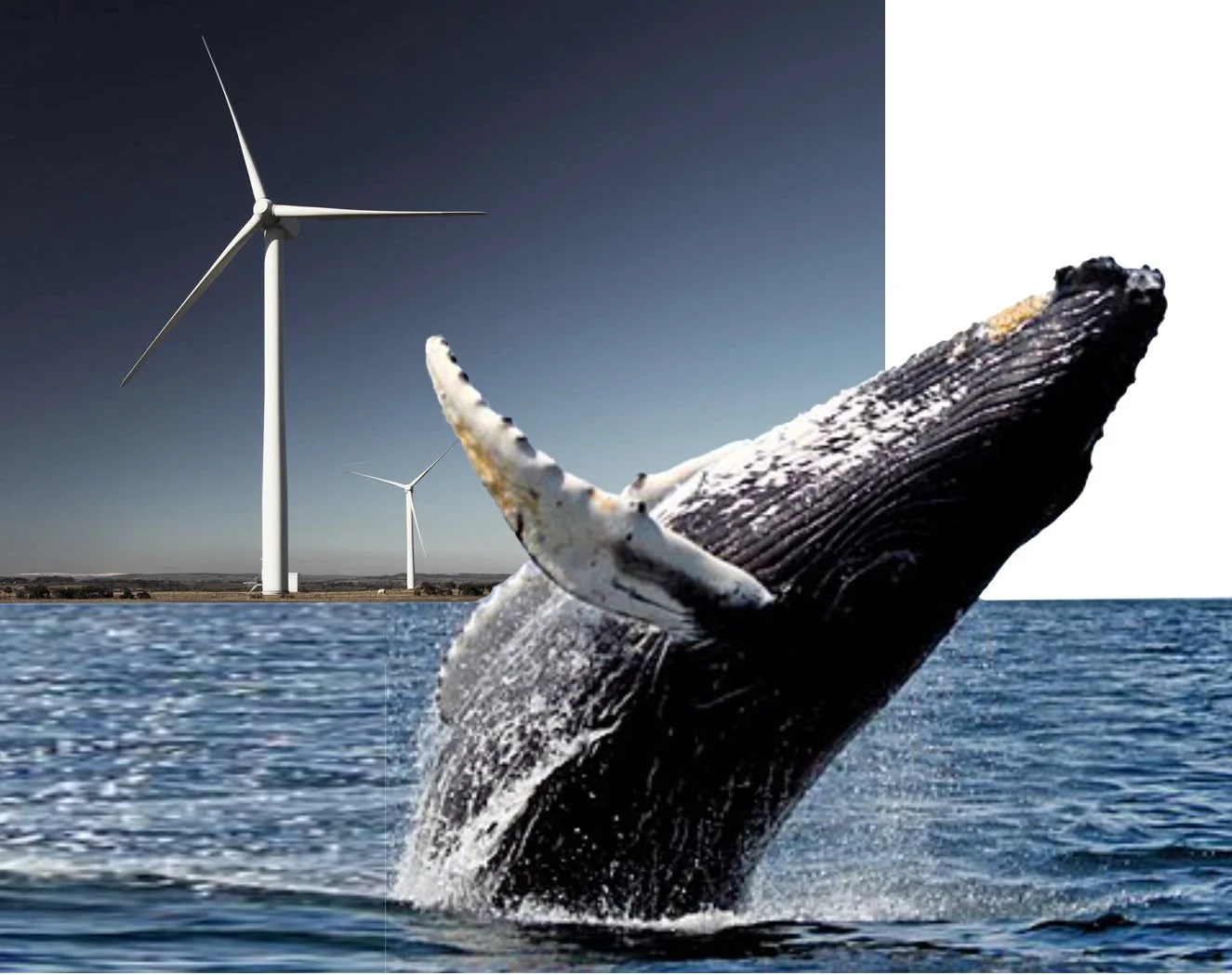
The humpback whale’s flippers provided insights into wind turbine blade design.
Fish thought the sculptor had made an error in sculpting bumps along the wrong (leading) edge of the whale’s flippers. After all, fluid dynamics dictated that the bumps should have been on the opposite side. Intrigued, Fish spent decades studying the whale’s flippers and how they worked.
Bumps on flippers channel the current into smooth streams at almost any angle.
Today, wind turbine blades feature bumps, known as tubercles, due to Dr. Frank Fish's discovery of their efficiency-boosting properties, modeled after humpback whale flippers. These bumps reduce resistance, improve lift, and prevent stalling at low speeds, leading to significantly more stable and efficient energy generation.
Read more here: asknature.org